Introduction
Blueberries is a familiar everyday food, but it becomes much easier to use well when you understand its calories and nutrient profile. This guide summarizes blueberries nutrition per 100 g, key vitamins and minerals, practical health benefits, and simple eating tips for different goals.
📊 Blueberries Nutrition Facts
Per 100 g
| Nutrient | Amount |
|---|---|
| 🔥 Calories | 57 kcal |
| 🍚 Carbohydrates | 14.49g |
| 🥩 Protein | 0.74g |
| 🧈 Fat | 0.33g |
| 🍬 Sugar | 9.96g |
| 🌾 Fiber | 2.4g |
| 🧂 Sodium | 1mg |
| 🩸 Cholesterol | 0mg |
Per 100 g, blueberries provides 57 kcal, with 14.49g carbohydrates, 0.74g protein, 0.33g fat, and 2.4g fiber. The numbers are useful, but the real value comes from how it fits into a complete plate. Pair it with protein, fiber-rich sides, or healthy fats depending on your goal, and adjust portions based on your total daily intake.
🥗 Key Vitamins
| Nutrient | Amount | Daily Value | Main Role |
|---|---|---|---|
| Vitamin C | 9.7mg | 11% | Supports antioxidant defense, collagen production, and normal immune function. |
| Vitamin K | 19.3μg | 16% | Helps normal blood clotting and contributes to bone metabolism. |
| Vitamin E | 0.57mg | 4% | Acts as a fat-soluble antioxidant and helps protect cell membranes. |
| Vitamin A | 3μgRAE | 0% | Contributes to vision, immune function, and healthy skin. |
💎 Essential Minerals
| Nutrient | Amount | Daily Value | Main Role |
|---|---|---|---|
| Manganese | 0.336mg | 15% | Helps antioxidant enzymes and carbohydrate and fat metabolism. |
| Potassium | 77mg | 2% | Helps fluid balance, muscle function, and healthy blood pressure patterns. |
| Magnesium | 6mg | 1% | Supports muscle relaxation, energy metabolism, and many enzyme reactions. |
| Iron | 0.28mg | 2% | Supports oxygen transport and energy levels through red blood cells. |
⚖️ Blueberries Calorie Comparison
Blueberries provides 57 kcal per 100 g. Calories are only one part of the picture: protein, fiber, water content, and cooking method all change how satisfying a serving feels.
💚 Health Benefits of Blueberries
1. Provides Protective Plant Nutrients
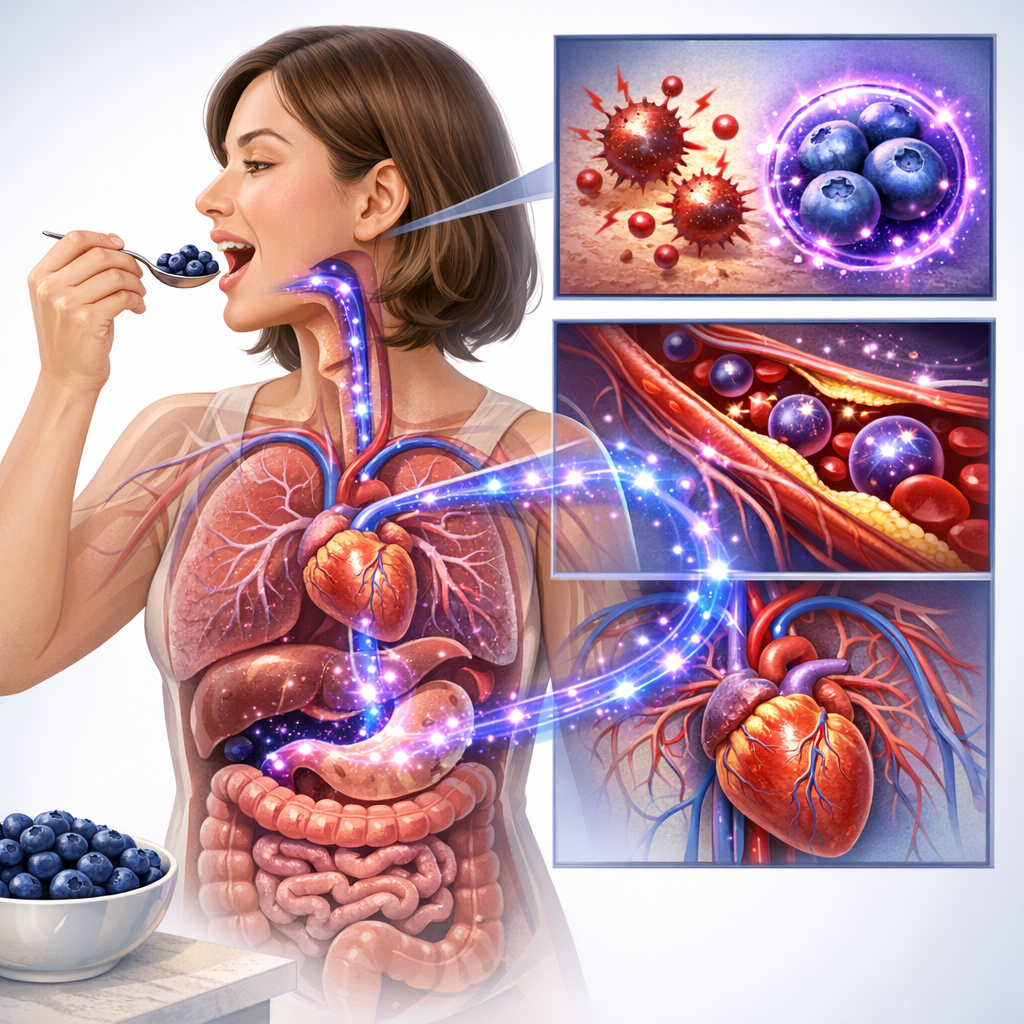
Blueberries brings naturally occurring vitamins, minerals, or plant compounds that help round out antioxidant intake. It works best as part of a varied diet with different colors and food groups.
Key nutrients: Vitamin C, Vitamin K, Manganese, Potassium
2. Supports Digestive Comfort
Blueberries can contribute to a more balanced gut-friendly plate, especially when eaten with enough water and other fiber-rich foods. Start with moderate portions if you are sensitive to fiber or fermented foods.
Key nutrients: Vitamin C, Vitamin K, Manganese, Potassium
3. Fits a Heart-Friendly Diet
Blueberries can support heart-conscious eating when it replaces more processed, salty, or sugary choices. Keep seasonings balanced and pair it with colorful plant foods for potassium, fiber, and antioxidants.
Key nutrients: Vitamin C, Vitamin K, Manganese, Potassium
4. Easy to Use in Balanced Meals
Blueberries is easy to fit into everyday meals without complicated cooking. The simplest approach is to keep portions realistic and build the rest of the plate with vegetables, protein, whole grains, or healthy fats.
Key nutrients: Vitamin C, Vitamin K, Manganese, Potassium


🎯 How to Eat Blueberries for Your Goals
Weight Loss
| Item | Guide |
|---|---|
| Suggested portion | Use the 100 g value of 57 kcal to fit blueberries into your meal target. |
| Best timing | Lunch, dinner, or a planned snack time |
For weight loss, blueberries works best when it replaces higher-calorie snacks or highly processed foods. Pair it with vegetables and enough protein so the meal stays satisfying.
Muscle Building
| Item | Guide |
|---|---|
| Suggested portion | Check the protein value (0.74g) and carbohydrate value (14.49g) and adjust for training volume. |
| Best timing | Pre-workout meals, post-workout meals, or protein-focused main meals |
For muscle gain, use blueberries as part of a full plate with protein, carbohydrates, and colorful produce. Consistency matters more than forcing a large serving at once.
General Health
| Item | Guide |
|---|---|
| Suggested portion | Choose a realistic serving that you can repeat comfortably. |
| Best timing | Any meal where you want better nutrition density |
For everyday health, rotate blueberries with other foods in the same group so your diet gets a wider range of nutrients.
🔬 Blueberries Composition, Selection, and Storage
| Component | Why it matters |
|---|---|
| Water and core nutrients | They shape the texture, fullness, and calorie density of blueberries. |
| Vitamins and minerals | They help support everyday metabolism, energy use, and general wellness. |
| Natural food compounds | Color, aroma, and flavor compounds make meals more satisfying and varied. |
How to Choose
Choose products with natural color, a fresh aroma, and minimal damage or discoloration. For packaged items, check added sodium, sugar, oils, and ingredient quality.
Storage Tips
Keep fresh foods sealed and refrigerated when needed. Store dry foods and oils in a cool, dark place, and use opened products before their flavor or color noticeably changes.
Final Thoughts
Blueberries can be a simple, useful part of a balanced diet when the portion and pairing fit your goal. Use the nutrition numbers as a guide, then adjust based on your appetite, activity level, and the rest of your plate.
📱 Track Food Faster with Dieter
Snap a photo to check calories and nutrition instantly, then keep your meal log in one place.
- Calories and macros
- Meal log in seconds